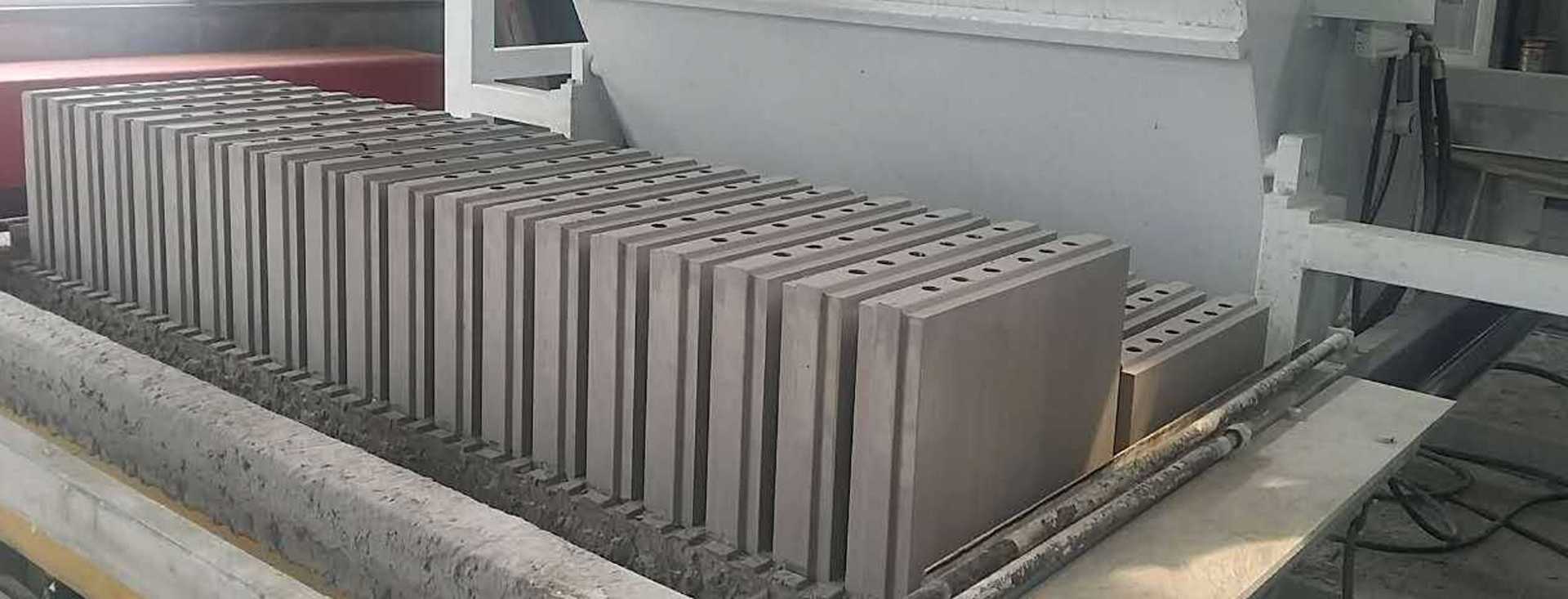
Fully automatic gypsum block machine revolutionizes lightweight partition production using gypsum and water. This gypsum block manufacturing equipment combines precision engineering with smart automation to deliver consistent, high-quality gypsum hollow blocks for modern construction needs.
Gypsum Block Making Machine
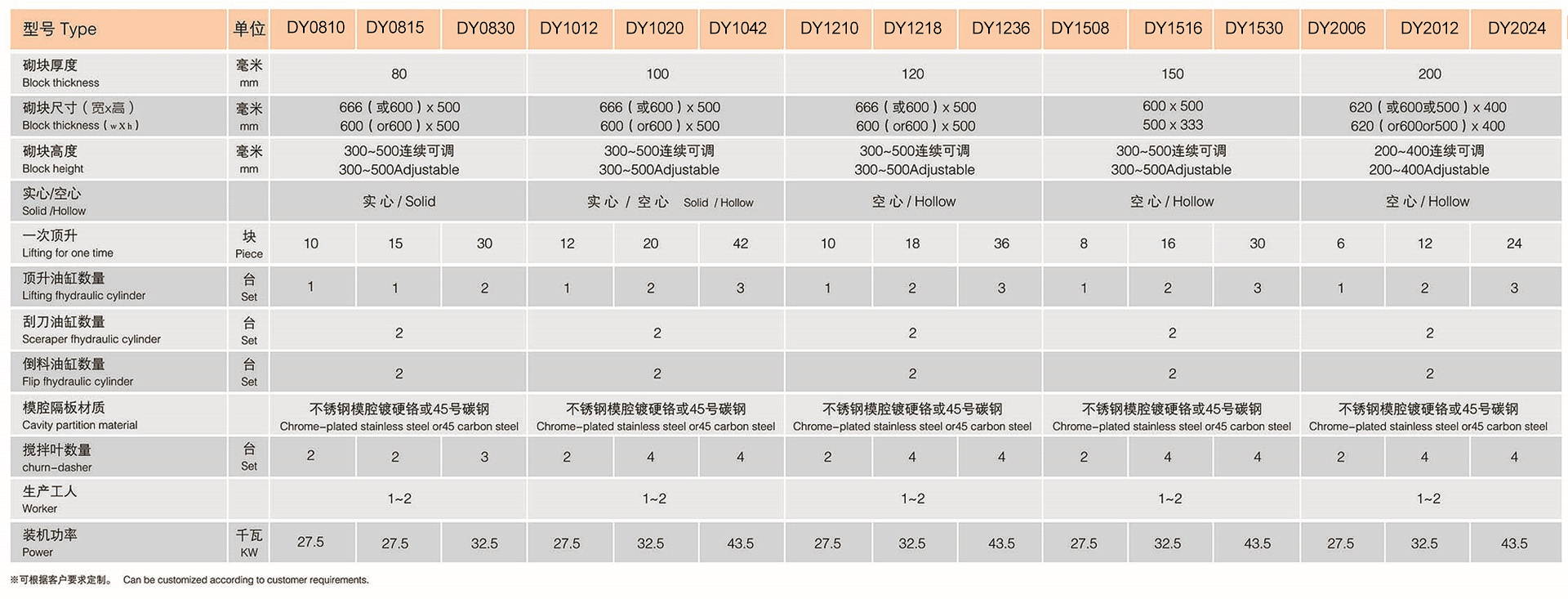
Types Of gypsum block making machine
How to make gypsum blocks?
Our gypsum block manufacturing equipment combines cutting-edge technology and precision engineering to deliver high-quality lightweight hollow blocks for construction applications. Below is a detailed breakdown of the automated production process:
1. Dosing System
The dosing system ensures precise material ratios for consistent block quality:
- Water metering device and powder metering device (gypsum, additives) with compressed air systems.
- Uniform mixture control prevents segregation and enhances strength.
- Ideal for gypsum hollow block equipment requiring eco-friendly materials like desulfurized gypsum.
2. Screw Conveyor Feeding System
Designed for smooth material flow:
- Discharge balance device and butterfly valve ensure clog-free, uniform discharge.
- Reduces manual labor in gypsum block production line operations.
- Supports scalable capacity for high-efficiency production.
3. Mixer
A high-speed mixer with stainless steel components ensures thorough blending:
- Mixing tank and stirrer with motorized pouring cylinder.
- Optimal consistency for mold filling and strength.
- Equipped with an intelligent control panel for real-time adjustments.
4. Forming Machine
The gypsum block forming machine transforms slurry into precise shapes:
- Hydraulic-powered molds for lightweight hollow blocks.
- Multi-specification production via quick mold changes.
- Fire-resistant and soundproof properties depend on the tested block formulation and wall assembly.
5. Central Hydraulic Station
Provides reliable power for critical operations:
- High/low pressure oil pumps and drive motor with an oil reservoir, filler and liquid-level indicator.
- Electromagnetic valves and throttle valves ensure smooth mold movement.
- Essential for automated gypsum block equipment.
6. Pneumatic Flexible Fixture
Efficiently handles blocks during production:
- On-rails trolley with high/low speed movement and brake positioning.
- Ergonomic design reduces damage risks in gypsum block machinery.
- Supports modular production lines.
7. Automatic Control System
A PLC-based control system ensures seamless operation:
- Button box and electric control cabinet for user-friendly monitoring.
- Real-time data tracking and remote adjustments subject to the selected control-system configuration.
- Enhances safety in gypsum block manufacturing.
Why choose us?
- Sustainable: Utilizes industrial waste like phosphogypsum for green construction.
- Cost-Effective: Reduces labor and energy costs with automated processes.
- Versatile: Produces blocks for interior partitions, fire-resistant barriers, and more.
Advantages | Experience |
Our experience | over 300projects in China, all over the world |
Formula | The formulation is selected according to available raw materials and the target product requirements. |
Cavity quantity | 4–52 cavities per mould, depending on the selected configuration. |
Different sizes | Mould design depends on the required block sizes and selected equipment configuration. |
Mixer | Mixer configuration depends on the selected production line. |
What we provide | For your project |
Project design | We can discuss the plant layout, machinery arrangement and equipment list for your project. |
Labor shifts | arrangement suggestions |
Raw material supports | We can discuss raw-material requirements and supplier information for your project. |
Installation | Installation and commissioning support is planned according to the project scope and contract. |
Testing | After installation, production testing and acceptance follow the agreed project requirements. |
After-sale service | we will be here for 24hours. When you need any help, just contact us! |
Key Features
Our gypsum block drying kiln features a single-channel tunnel design with optimized airflow and temperature control, ensuring efficient curing for lightweight hollow blocks. This energy-efficient drying system is ideal for automated gypsum block production lines, delivering consistent quality and high throughput.
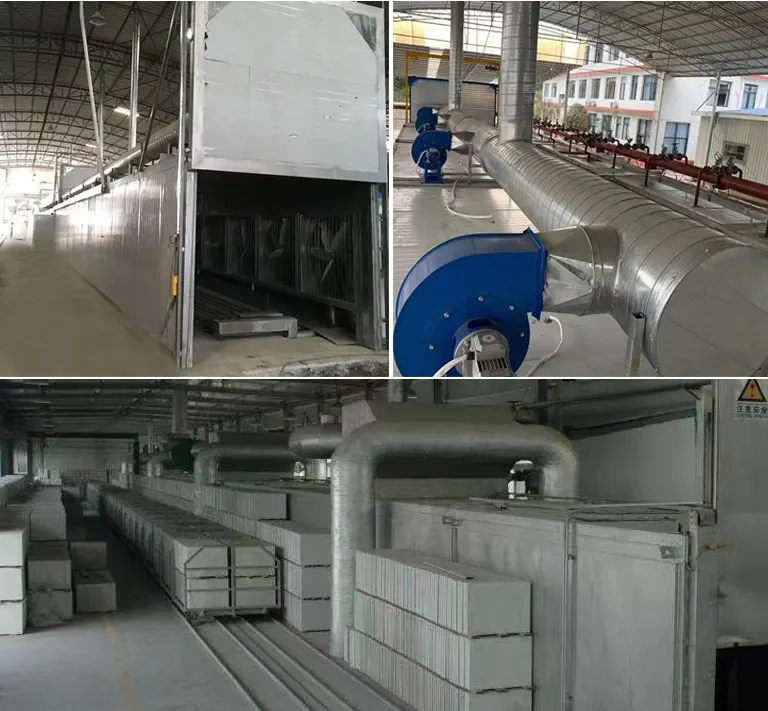
1. Structure & Heat Source
- Tunnel Kiln Design: A bottom air inlet and top air outlet distribute hot air through the drying chamber.
- Diesel Burner System: Provides reliable flame heat exchange for uniform drying.
- Centrifugal Fan Circulation: Forced air circulation supports moisture evaporation.
- Independent Moisture Drainage: Prevents condensation buildup in gypsum block equipment.
2. Air Circulation System
- Forced Large-Flow Hot Air: Directional circulation with independent temperature and airflow controlenhances drying efficiency.
- Underfeed Air Supply: Fans blow hot air into ducts from the tail, distributing evenly via perforated air distribution plates for bottom-to-top airflow.
- Top Exhaust System: Moisture-laden air is extracted by roof-mounted exhaust fans after exchanging heat with the wet blocks.
3. Kiln Car Handling
- Kiln Car Turning and Lifting Device: Enables seamless kiln car rotation and positioning for continuous operation.
- Dual-Lane Configuration:
- Empty Car Back Lane: Returns empty kiln cars to the loading station.
- Loaded Kiln Car Unloading Lane: Efficiently removes dried blocks from the kiln.
4. Key Advantages
- Uniform Drying: Airflow and temperature control help manage drying uniformity in gypsum hollow blocks.
- High Capacity: The source lists 4–52 cavities per mould; confirm the selected mould configuration for gypsum block manufacturing.
- Low Maintenance: Durable stainless steel components and modular design reduce downtime.
Applications of Gypsum Blocks in Modern Construction
Gypsum blocks are versatile, eco-friendly building materials widely used in residential, commercial, and industrial projects. Here’s how they enhance construction efficiency and sustainability:
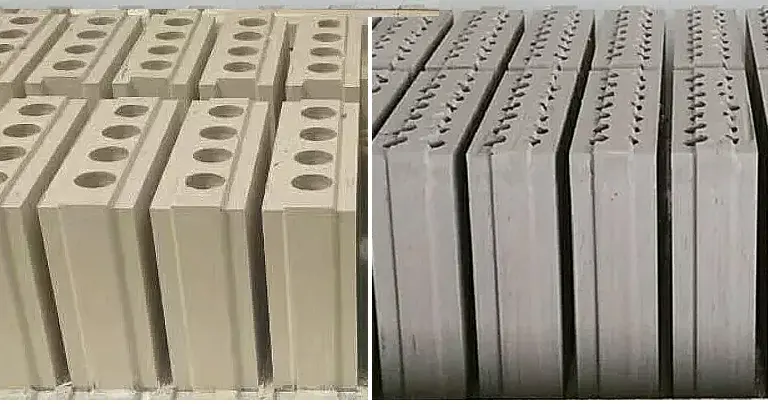
1. Interior Partitions & Walls
- Scenarios: Offices, hotels, apartments, schools.
- Advantages:
- Lightweight: Reduce structural load by 30% compared to traditional masonry.
- Soundproofing: Blocks with 100-150mm thickness achieve 40-50dB noise reduction.
- Fast Installation: Dry construction method cuts labor time by 50%.
2. Fire-Resistant Barriers
- Scenarios: Fire-rated walls, stairwells, electrical room enclosures.
- Advantages:
- Fire Performance: Withstand fire for ≥3 hours (ASTM E119 certified).
- Non-Toxic: Material composition and applicable test documentation must be reviewed for the project.
3. Industrial & Infrastructure Projects
- Scenarios: Suitable applications depend on the specified block grade and exposure conditions.
- Advantages:
- Moisture Resistance: Ideal for humid environments (water absorption ≤8%).
- Chemical Stability: Chemical exposure limits must be verified for the selected materials and service conditions.
4. Decorative & Architectural Elements
- Scenarios: Feature walls, ceilings, cultural centers.
- Advantages:
- Smooth Surface: Directly paint, tile, or apply decorative finishes.
- Customizable: Available in textures, colors, and shapes for artistic designs.
5. Green & Sustainable Construction
- Scenarios: Building projects with specified energy and environmental requirements.
- Advantages:
- Eco-Friendly: Made from 90% recycled materials (e.g., desulfurized gypsum).
- Low Carbon: Reduce CO₂ emissions by 40% compared to concrete.
Contact us
Got Questions? Let’s Build Your Success Together
Transform Your Construction Business with Automated Gypsum Block Solutions

